
BROWN ADVISORY ANNUAL REPORT
PARTNERSHIP
Dear Friends:
Welcome to the 2025-2026 Annual Report on Brown Advisory!
We appreciate the opportunity to share thoughts with you — this year, for the first time as Co-CEOs — about how our team of more than 1,000 colleagues are working to carry out our responsibilities to our clients.
In so many respects, the world looks much different and seems much more intense than just one year ago. We all see this in global affairs, politics, our economies and our relationship with technology. These changes are on our minds every day. They are creating pressures and anxieties at levels that can be intimidating and overwhelming for any one person to process or navigate on their own. Today, more than ever, we believe our responsibilities as investors, advisors and leaders for our clients require additional eyes and ears. Our early experience in joining forces as Co-CEOs has reinforced this belief many times over.
Since our inception as an independent firm, your thoughts — as clients, colleagues and shareholders — have been essential in building Brown Advisory as a firm that is constantly evolving and always trying to think ahead. We recognize that the best way to meet the challenges of the future is in partnership with you. We hope you will continue to let us know what you think.
At a time when both the direction and rate of change are driving uncertainty across the globe, it has been helpful for us to reflect on some things that remain constant at Brown Advisory.
Our vision
We must thoughtfully source innovative, compelling and relevant solutions to our clients’ investment, financial and strategic objectives in the present and over the long term.
Our strategy
We will remain private and independent — it allows us to put our clients first, to think long term, and to attract and retain the human talent necessary to serve our clients. We will continue to meaningfully re-invest in our business to develop our talent, technology, processes and new solutions. We will evaluate everything we do: Is it truly relevant and compelling? We will direct our capital, time and focus toward the work that matters most for clients — and apply discipline to step away from the work that no longer does.
Our culture
We must be bold and disruptive. We must generate ideas and “connect dots” across the firm to bring our best thinking to clients and earn their trust. We must “team” well to maximize the benefit for our clients, for our colleagues and for the communities in which we work and live. Healthy teams promote asking tough questions, challenging assumptions and supporting each other. We must be unambiguous in ownership and accountability.
In a world where long-held assumptions about what is possible are changing on a daily basis, our resolve in protecting these constants — our vision, strategy and culture — reinforces our client-first focus in everything we do.
Living up to this promise of being “client-first” requires us to ask ourselves the tough questions: What should we do differently? How do we thoughtfully — and honestly — consider that what has worked for us in the past might not be successful in the future? How do we maintain the humility necessary to ask and answer these questions?
These questions were the driving force behind our decision — one with a very clear focus on the future — to shift the leadership of Brown Advisory from the more traditional “sole” CEO model to a “partnership” Co-CEO model where we would lead and manage the firm together. We wanted to communicate that we, too, were ready to think outside the box, break from tradition and try something new to help our clients succeed.
At the same time, we knew there would be some skeptics of this idea. We have, therefore, spent a lot of time talking through the benefits and risks inside and outside the firm — with clients, colleagues, shareholders and other leaders in our industry — and listening to what we heard in response. Ultimately, our goal is to provide seamless and transparent leadership — leadership where the benefits of the new structure are tangible. One year in, we have learned quite a bit.
Working together as partners is fundamentally different than working merely as teammates. In our previous Annual Reports, we have reflected upon how important we believe the “team thing” is at Brown Advisory. We believe that effective teams are critical to healthy idea sharing, problem solving and, frankly, honest intellectual thinking. Now, we even refer to it around the firm using the verb: We need to team up well — we owe it to our clients and to each other. Working together as partners, however, requires something more — a true, and understood by all, “co-ownership” of outcomes. We bear the responsibility of each other’s decisions and the ultimate accountability for the decision’s outcome. The buck stops with both of us!
We have also come to appreciate some of the more subtle elements of our new partnership. Acting as partners is present in our daily lives, almost 24/7. We now share ideas and questions with a level of frankness and candor that is elevated from our prior working relationship. We rely on each other’s different expertise, leading us to take new approaches to problems and opportunities. We have shared worries and concerns with each other during some very stressful periods. In doing so, we have built an even higher level of trust that has allowed us to ask each other the toughest of questions.
We know there is a great deal of benefit in people seeing us defer to the other and ask each other pointed questions. Yes, being challenged can be intimidating — even for CEOs — but the value of thinking through another angle or idea will more often lead to better outcomes. We hope that allowing colleagues to witness our willingness to engage in this sort of back and forth will help them feel more comfortable both to challenge and be challenged.
There are also some very practical elements of having a partner. We don’t do everything together but try to split up and allow the Brown Advisory CEO, in effect, to be in two places at once. Not only does this increase our capacity to get things done, but it permits us to meet with more people — clients, colleagues, people in the investment community and many others — and to listen. Having two Co-CEOs also resets a norm. We have opened up the possibility of different leadership models at all levels of Brown Advisory, encouraging our colleagues to consider whether two or more co-heads would be better than one.
Working together as Co-CEOs this year, we also committed to each other to take the time to make sure each of us understood exactly why we were doing things in every corner of the firm, beginning with our responsibilities to our clients. In each instance, we force ourselves to articulate in the most basic and clearest terms — without labels or acronyms — what we care about and what matters to our clients and our colleagues. Labels, acronyms, terms expressed by initials and so forth might provide an easy shortcut in conversation, but they also often lead people to focus on a headline instead of taking the time to understand exactly what we are doing, and why.
Our industry uses a lot of terms that can mislead people. You see this even in some of the issues that have been occupying most of the “mindshare” of investors this past year: the extreme concentration in our markets by the leading technology companies, the effort to “democratize” private market investing and the many questions raised by the enormous commitment to AI. As Co-CEOs, we are committed to breaking down these challenges and determining what our response should be.
Market Concentration
Public financial markets are clearly facing structural pressures as passive market-weighted index strategies have evolved into increasingly unbalanced investment vehicles. Today, these indices are heavily concentrated in just seven companies (Alphabet, Amazon, Apple, Meta, Microsoft, NVIDIA and Tesla), all in some way connected by the race to dominance and relevance in AI. We still recognize that the original purpose of passive index funds has a lot of merit — offering a low-fee alternative to access broad equity exposure with reasonable levels of risk. However, this is a long way from where we are today; as of December 31, 2025, these seven stocks occupied nearly 35% of the S&P 500® market-weighted index — more than double their combined 15% share of the index at the end of 2018. Back in 2018, none of these companies had a market cap higher than $780 billion. At the end of 2025, the smallest was Tesla with a market cap of $1.5 trillion. Both Apple and NVIDIA sported market caps of over $4 trillion — up from $746 billion and $81 billion, respectively. It’s remarkable.
We know exactly why this is happening. As someone purchases one of these stocks — whether individual, institution or algorithm — and the stock value increases, a market-weighted index fund has to match that purchase to maintain the same percentage weight as the index. Do investors in these funds understand the “bets” that they are making? Rather than a diversified fund, they are ending up with a significant bet on seven companies. Do investors appreciate the risk if the reverse occurs — when shares are sold, the index fund must also sell to maintain its weighting? Often that response can trigger the familiar cycle that matches the velocity of the trip up, but with a lot less enthusiasm on the way down. Our responsibility is clear. While we are investors in these individual companies, in most cases, our investment exposure does not match the percentage represented in the index. We must make sure our clients understand why that is — our investment strategies are driven by an underlying analysis of each company and not its representation in the index. We are asking ourselves questions like: What is the upside in this company relative to the risk of holding such a large position? How do the prospects of these companies line up with our clients’ investment targets — in terms of both return and risk? These seem to be tougher questions to ask right now but, to us, they are the most important ones.
“Democratization” of Private Equity
There are similar structural challenges in the private markets as some of the largest firms in our industry develop programs to offer private investment funds to retail investors. Recent corporate partnerships targeting this market include: T. Rowe Price & Goldman Sachs; Blackstone, Vanguard & Wellington Management; Capital Group & KKR; and Apollo & State Street. The Deloitte Center for Financial Services predicts, “Should recent trends continue, retail investors’ allocations to private capital will grow exponentially by 2030, from an estimated $80 billion to $2.4 trillion in the United States, and more than triple in the European Union — from €924 billion to €3.3 trillion.”
The underlying investments these funds make in the equity of private companies are inherently illiquid and will take a number of years to prove their worth. Wrapping these investments in a fund structure doesn’t convert them to liquid investments with daily, monthly or even quarterly liquidity. The same challenge exists for funds being formed to provide retail investors access to private credit. As a result, these funds are being modified by retaining cash or putting in place lines of credit to meet likely demand for liquidity from retail investors prior to the end of the usual private equity investment timeline, often five to seven years. The result is that the overall return of the fund, relative to the return of a fund that doesn’t have this market-driven constraint, is likely to be diluted by the “managed” commitment to liquidity. Our responsibility here is also clear: As these new funds drive a shift in the types of investors who can access underlying private investments, we must ensure that our clients understand the impact on their own investment return and risk objectives. This is another situation where rapid growth in new fund assets might not align well with our clients’ interests.
The Consequences of AI
In addition to questions related to the merits and risks of the companies active in the AI space and their impact on the financial markets and the broader economy, we are also dedicating significant time to understand the utility of AI across all aspects of our business. As the technology has evolved, so have our views. Just two years ago, we focused on understanding the fundamentals of what AI could offer to an investment firm. At the beginning of 2025, we shifted to a far more purpose-driven stage of experimental engagement where more of the focus was on efficiencies that could be achieved. Today, we are in a very different place: Most of our colleagues are using AI in some capacity, primarily with the purpose of being more effective with their time. How can we use AI to gain access to relevant information quickly and in an easily digestible format? How can it be a game changer for us as investors, strategic advisors and client service team members? Yes, we are still in the “early innings,” but each day, we are grasping a better understanding of the power of AI tools.
As Co-CEOs, we are engaged in the firm’s commitment to AI every day. Brian Cobb, our Chief Technology Officer, and Martin Ouimet, our Director of Business Data and Analytics, report to us directly. We are also active AI users and are finding AI “utility” in our daily work routines, which we hope is providing incentive to others throughout the firm to take their own AI commitment to a higher level.
Each of these issues presents an enormous challenge. We believe we are well positioned to meet them all, head on. They also represent some of the most significant opportunities in front of us. To capitalize, we must continue to press the advantage our independence provides us: to put clients first and think long term. Our structure is perhaps our greatest asset, and we are as committed as ever to protecting it.
As you can now see, our approach in this letter differs significantly from past years where the focus has been on headlining new strategic investments and sharing our financial results. This year, we wanted to make sure we took the time to share with you how we think the year has evolved for us as new Co-CEOs. The leadership structure fits Brown Advisory and the two of us well — it is leading us to think about and focus on the things that we believe are critical to our clients’ success. We hope that sharing our thoughts on three very complex topics — market concentration, pressures on private investing and AI — gives you some insight into where we are spending our time. We welcome your thoughts and questions on whether our perspectives and the new leadership structure make sense to you.
In the remainder of this report, we will provide a window into the focus of our over 1,000 colleagues. It has been an incredibly busy year. The launch of three active ETFs, new offices in Abu Dhabi and Dallas, the recruitment of an Outsourced Chief Investment Officer (OCIO) investment head, a global value team based in London and a combination with Marylebone Partners are just a few examples of what we have been working on. We are eager to share with you the “why” behind each of these significant strategic investments.
We are also excited to share our financial results. Brown Advisory again made steady progress toward our long-term objective of remaining a private and independent firm focused on our clients. Our balance sheet and bottom line afford us the flexibility of funding our strategic investments and significant investments in our current team. We ended 2025 with client assets of $174.0 billion, up 2.5% from year-end 2024. Revenue for the year was $648.8 million, an increase of 4.7% year-over-year. Our client relationship retention rate was nearly 98%, and we welcomed 303 new clients and $23.2 billion in new assets to the firm. Looking back five years, the firm achieved an average annual growth rate of 9.4% in client assets, 11.9% in revenue and a client retention rate of over 97%.
We hope this letter marks the beginning of a worthwhile investment of your time as you read through the rest of the report. As we learned after publishing our last report, dedicated to the value of “Thinking,” many of our clients, colleagues, shareholders and supporters truly appreciate hearing about what’s on our minds, what questions we are asking, and why things seem to be happening in certain very consequential ways. In return, our commitment to you is to respond with more reflection and questions as we navigate these topics together. As Co-CEOs, we are committed to doing so as your true partners.
Sincerely,
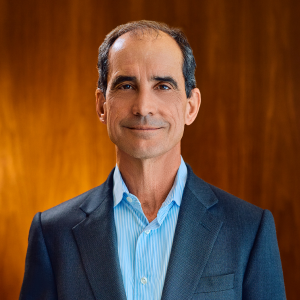

Mike Hankin
Co-CEO and Partner
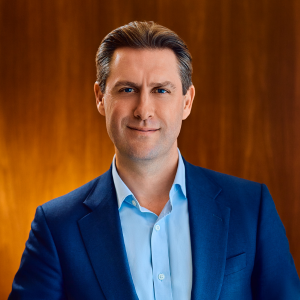

Logie Fitzwilliams
Co-CEO and Partner